
A moisture-first approach
We look for the water source behind the problem using tools like moisture meters and infrared imaging where appropriate. Without fixing moisture, any cleanup is temporary.
Serving Toledo, Ohio & surrounding areas
Mold testing in Toledo, Ohio
If you smell something musty, see staining, or have had a leak, a professional inspection can confirm what's actually in the air and on surfaces. You'll get a clear, written report you can use to plan the next step with confidence.
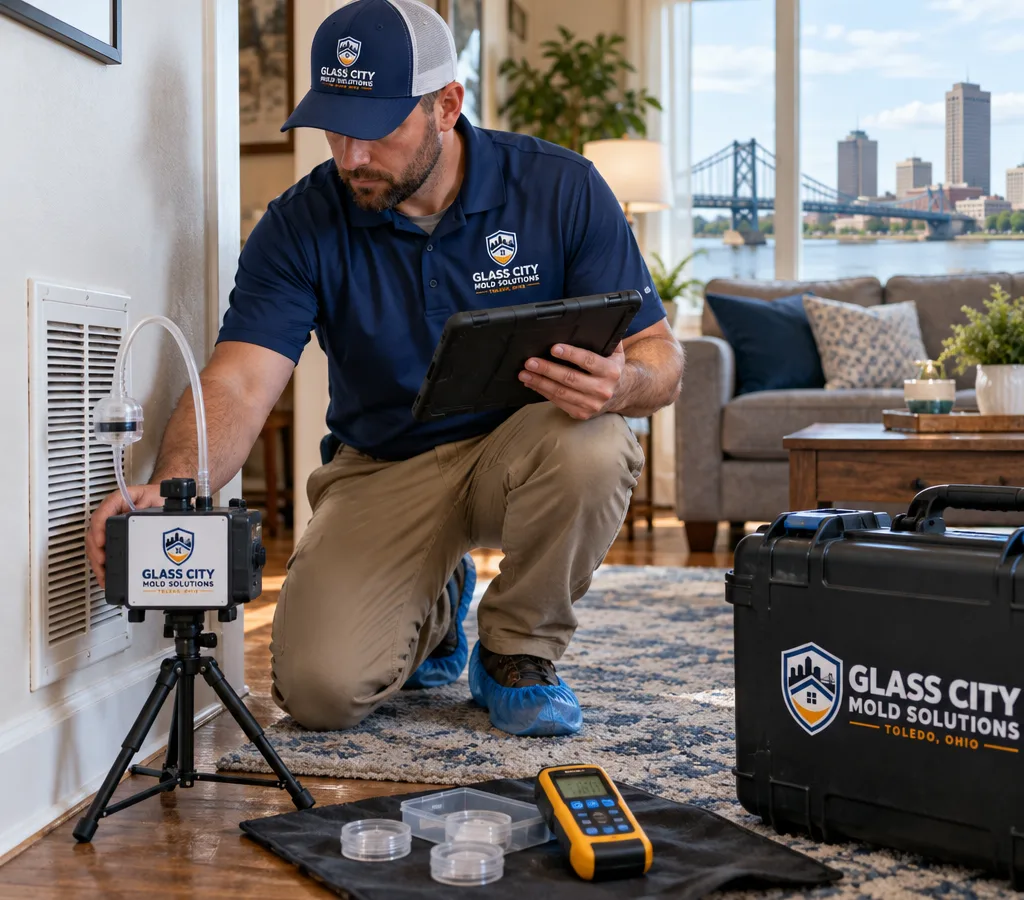
Know what the findings mean
Mold testing in Toledo is about answers: where the moisture is coming from, whether conditions support mold growth, and what types of spores are present in the indoor air compared with outdoors. Testing helps you avoid guessing, especially when symptoms, odors, or discoloration could have more than one cause.
A good inspection connects three things: moisture, building materials, and airflow. Mold needs water. If a basement wall is damp, a bathroom exhaust fan vents poorly, or a past roof leak soaked insulation, spores can grow on drywall paper, wood framing, carpet backing, or inside a supply boot.
Testing does not replace remediation. It is the diagnostic step that guides it. If active growth is found, the report should point to the likely moisture driver and recommend practical next actions. If your situation already has obvious visible mold with a known water source, testing can still help document conditions and set a baseline before cleanup.
Glass City Mold Solutions provides mold testing Toledo homeowners, landlords, and businesses use when they need a straightforward scope, documentation, and a plan that makes sense.
Inspection and testing scope
We look for the water source behind the problem using tools like moisture meters and infrared imaging where appropriate. Without fixing moisture, any cleanup is temporary.
Air samples can compare indoor spore levels to an outdoor control sample; surface or tape samples can confirm what's on a suspicious material. We sample based on conditions, not a one-size checklist.
You get notes on observations, building materials, ventilation, and areas of concern so the report matches what's happening in the space, not generic advice.
Results are organized so you can share them with property managers, contractors, or tenants and make decisions without translating lab language.
If results indicate a problem, we outline containment priorities and where removal or drying should focus. If results are normal, we explain what to watch and why.
Inspection, sampling, and reporting
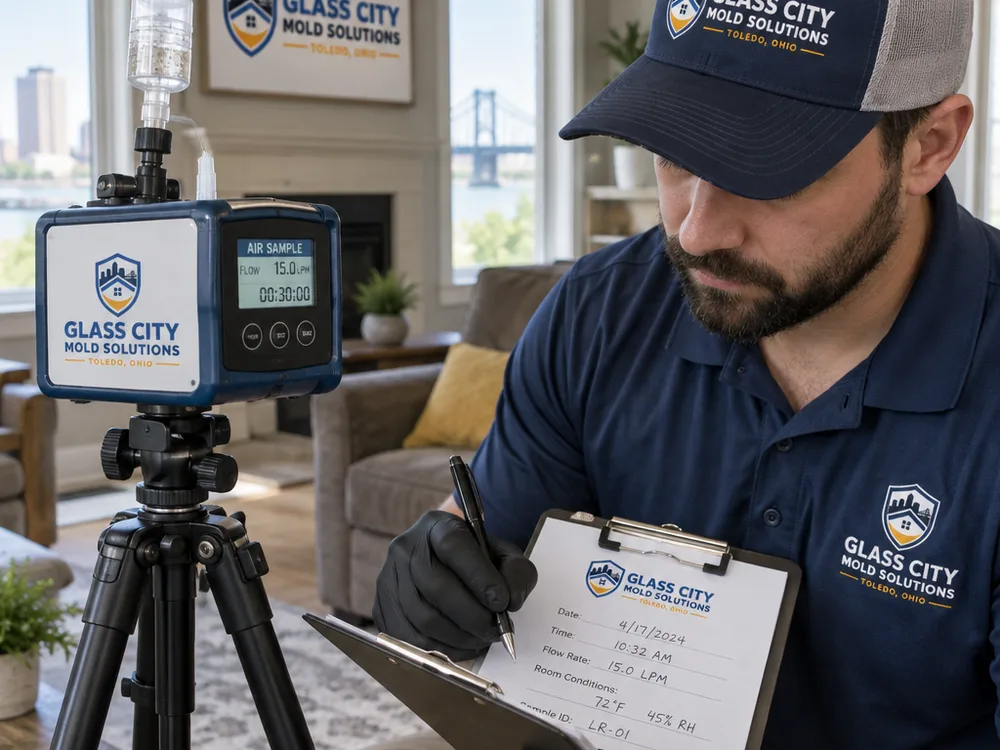
Most appointments start with a walkthrough and a short interview about what you've noticed: musty odors, recent leaks, a damp basement, visible spotting, or recurring condensation. In Toledo's older housing stock, we often pay special attention to basements and crawlspaces, attics with older insulation, and bathrooms that rely on window ventilation.
We then check for moisture and conditions that let spores settle and grow. That usually includes targeted readings with a pin or pinless moisture meter on drywall, trim, and subfloor areas near plumbing, exterior walls, and around sump pits.
Sampling is chosen based on what we find:
Finally, we document likely moisture pathways. Around the Maumee River corridor and the wider Toledo metro, fluctuating humidity, wet basements, and past water intrusions are common drivers, so we note grading, downspout discharge, and signs of past flooding or seepage where visible.
When lab results return, we explain what they mean in plain language, including whether indoor results look elevated compared to the outdoor baseline and whether the spore types suggest a moisture problem inside the structure.
From intake to written findings
We confirm the address, building type, and what prompted the concern (odor, visible growth, a leak, or a real estate contingency) so we can bring the right equipment and plan sensible sample locations.
We walk the areas you're worried about first, then check adjacent rooms and likely moisture sources: bathrooms, laundry areas, basements, and any locations under roof penetrations or around exterior walls.
We collect air and/or surface samples based on what we see. An outdoor control sample is commonly used so indoor results have a local baseline for that day.
Samples go to a qualified lab for spore identification and counts. We review the report with you and explain the practical meaning, not just the raw numbers.
You receive documentation of observations, sampling locations, lab results, and recommendations. If remediation is needed, the report helps define the scope so the work targets the real source.
Inspection-based pricing
Mold testing in Toledo typically ranges from about $250 to $750+, depending on how many areas are evaluated and how many lab samples are collected. A straightforward inspection with 1 to 2 indoor air samples and an outdoor control sample tends to be at the lower end, while larger homes, multi-unit buildings, or investigations that include multiple rooms and surface samples cost more.
Your final price depends on sample count, size of the property, access (attics, crawlspaces), whether moisture mapping is needed, and how much documentation you want for real estate, tenants, or insurance. Exact pricing is confirmed after the on-site inspection scope is clear.
Conditions and locations
Mold is usually a moisture story, and the details matter. In neighborhoods with a lot of older homes such as Old West End, small roof leaks can wet plaster or old lath walls for a long time before staining appears. In Point Place and other areas closer to the water, damp basements and humidity swings can push moisture into stored items, wood framing, and the backside of finished basement walls.
In South Toledo and other parts of the city with a mix of slab and basement foundations, we often see concerns around bathrooms and laundry areas where exhaust fans are undersized or vent to the wrong place. Condensation on supply ducts or around poorly sealed returns can also distribute odor and spores room-to-room.
During mold testing Toledo Ohio inspections, we focus on:
If testing shows a mold issue that needs professional cleanup, many clients continue into mold removal with the scope based on the findings rather than assumptions.
Homeowner experiences
We had a musty smell in the basement that kept coming back. The inspection pointed to moisture along one wall and the air sample results matched what we were seeing behind stored boxes. The report was clear enough that our contractor knew exactly what to open up and dry.
During a home sale, we needed documentation fast. The inspector explained where the samples would be taken, then walked us through the lab results in plain language. It helped us negotiate repairs without arguing over guesses.
Before your inspection
Most mold testing appointments take about 60 to 120 minutes, depending on the size of the property and how many areas need moisture checks and sampling. A targeted concern in one room moves faster than a whole-home inspection with an attic and basement review.
No. Air sampling is useful when there's an odor, symptoms, or suspected hidden growth, but it is not required for every situation. If there is clear visible growth and an obvious moisture source, surface sampling and moisture mapping may give better direction for the next step.
Most properties need an outdoor control sample plus 1 to 3 indoor samples in the areas that best represent the concern. Larger homes, multi-story layouts, or buildings with separate HVAC zones often need more samples so results aren't misleading.
Lab turnaround is commonly 2 to 5 business days after samples are submitted, with faster options sometimes available depending on the lab. We will set expectations at the appointment based on the sampling plan and timing.
We can often identify likely wet areas using moisture meters and infrared imaging, and then place sampling in rooms adjacent to the suspected cavity. Confirming growth inside a sealed wall cavity may still require limited opening by a qualified contractor if the evidence points that way.
It's not always required, but it is often the smart first step when the source or extent is unclear, when you need documentation for a property transaction, or when multiple parties need an objective report. If you already know the cause and the affected materials, remediation can sometimes proceed without lab testing.
Testing can identify spore types and relative levels, but the word “toxic” is not a practical pass/fail label for making cleanup decisions. The useful information is whether there's evidence of an indoor moisture problem and what scope of materials and areas are likely impacted.
Start with an on-site inspection
Tell us what you're seeing or smelling and where it's happening. We'll schedule a mold inspection, document the conditions, and provide a written report that helps you plan the right next step for your Toledo property.