
Containment that matches the risk
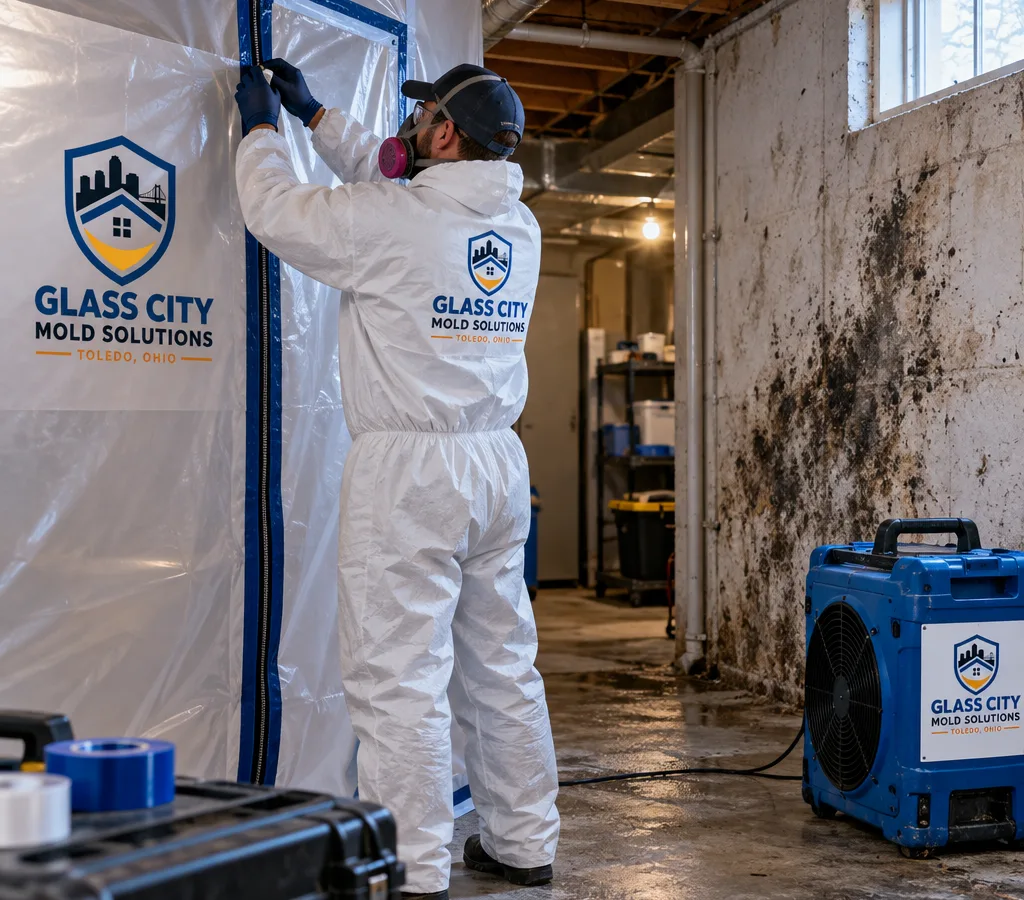
We use poly sheeting, critical barriers, and negative air when needed to keep spores from spreading to living areas during demo and cleaning.
Serving Toledo, Ohio & surrounding areas
Mold remediation in Toledo, Ohio
Stop mold at the source with a clear plan, proper containment, and verified drying so the problem does not come back.
Recognize the problem
If you are searching for mold remediation Toledo, you are usually dealing with one of two issues: visible growth that keeps returning, or a hidden moisture problem that is affecting air quality and materials. Mold remediation is the controlled process of removing contaminated building materials and cleaning remaining surfaces under containment, then drying and correcting the conditions that let mold grow in the first place.
In Toledo, mold commonly shows up after basement seepage, plumbing leaks inside walls, roof leaks around older penetrations, or prolonged humidity in poorly ventilated bathrooms and laundry areas. If the underlying moisture stays, bleach, fogging, and quick wipe-downs may lighten stains but often do not solve contamination in porous materials like drywall, insulation, carpet pad, and unfinished wood.
Glass City Mold Solutions focuses on practical, jobsite-safe remediation: isolate the affected area, capture spores with HEPA filtration, remove unsalvageable materials, clean and detail remaining framing and hard surfaces, dry the structure to stable conditions, and document what was done. If you are also comparing broader cleanup options, many homeowners start by understanding how remediation differs from mold removal.
Professional remediation scope
We use poly sheeting, critical barriers, and negative air when needed to keep spores from spreading to living areas during demo and cleaning.
HEPA air scrubbers and HEPA vacuuming are standard tools for capturing fine particles that ordinary shop vacs recirculate.
Drywall, insulation, ceiling tiles, and carpet padding typically cannot be reliably cleaned once colonized and are removed under containment.
Framing, masonry, and other hard surfaces are cleaned using appropriate antimicrobial cleaners, agitation, and HEPA vacuuming.
A remediation job is not complete until materials are dry and the source of moisture is addressed or clearly identified for repair.
You get a written scope of work, what areas are affected, what will be removed, and what the work area will look like at completion.
Hidden moisture and growth
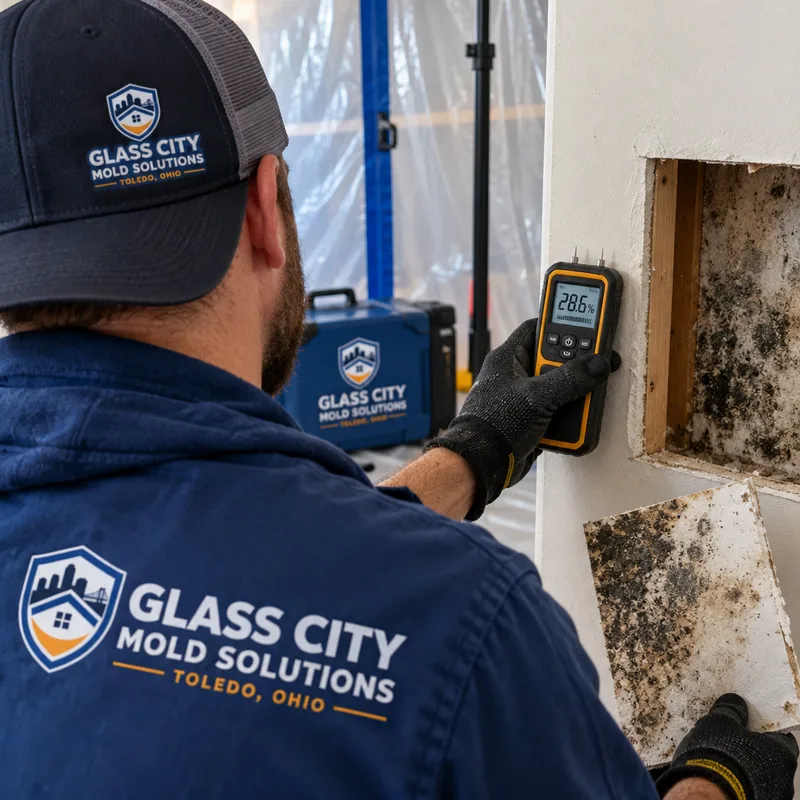
Mold is rarely confined to what you can see. Part of effective mold remediation Toledo Ohio is knowing where to check and how far to open up without causing unnecessary damage.
Common problem spots we investigate include:
Toledo has a lot of older housing stock, and older assemblies can hide slow leaks longer before obvious staining appears. In neighborhoods with many basements and older block foundations, small seepage events can create repeated damp cycles that feed mold on organic dust and framing. The right approach is controlled access: open only what is necessary, keep the work area under containment, and confirm conditions with moisture readings before closing anything back up.
From assessment to walkthrough
We identify affected materials, likely moisture sources (leak, seepage, condensation, ventilation), and the safest access points. If testing is already being handled by a third party, we can align the scope with their findings.
We isolate the work zone with barriers and, when appropriate, negative air. Pathways in and out are protected so debris does not cross clean areas.
Air scrubbers run during removal. Contaminated porous materials are removed, bagged, and staged for disposal according to the scope.
We HEPA vacuum, scrub, and treat remaining surfaces as needed. The goal is to remove contamination, not to mask staining.
We dry the area to stable conditions and verify moisture levels before containment comes down. If a repair trade is needed for the root cause, we document what must be corrected.
We review the completed area, discuss prevention (ventilation, humidity control, leak monitoring), and provide documentation of the work performed.
Inspection-based pricing
Mold remediation in Toledo typically ranges from about $1,500 to $6,500 for many residential projects, with small, contained areas sometimes closer to $800 to $1,800 and larger multi-room or basement jobs commonly $6,500 to $15,000+. Final cost depends on the square footage affected, how much drywall or flooring must be removed, how difficult access is (attics and tight crawl spaces take longer), the level of containment required, and whether drying equipment must run for several days. The exact price is confirmed after an on-site inspection and a written scope of work.
Homeowner experiences
We had a musty smell coming from the basement that kept returning. They found wet drywall behind shelving, set up containment, removed the damaged material, and showed us moisture readings when it was dry again. The house smelled normal within a couple of days.
After a slow leak under the bathroom sink, mold spread into the wall. The crew kept the dust contained and explained what had to come out and what could be saved. The documentation was helpful for our records.
Questions before remediation
Most mold remediation projects take 1 to 3 days of on-site work, plus additional drying time if materials are wet. A small bathroom wall area may be completed in a day, while a basement with multiple affected zones often needs several visits to allow drying and verification before re-entry and clearance steps.
Often you can stay home, but it depends on where the work is and how it is contained. If remediation is in a basement with contained access, many households remain in the home; if the work area is a primary bedroom, main bath, or HVAC return area, temporary relocation can be the safer and more comfortable choice.
Yes, porous materials like drywall and insulation are commonly removed when they are moldy or water-damaged because they cannot be reliably cleaned. The goal is to remove colonized material under containment, then clean and treat the remaining framing or masonry that can be salvaged.
Yes, but the key is addressing the moisture pattern that keeps the basement damp. Remediation can remove contaminated materials and clean the structure, but long-term prevention usually requires controlling water entry and humidity so surfaces do not stay above mold-friendly moisture levels.
We can provide a written scope, photos, and documentation that many insurance claims require, but coverage depends on the cause of loss and your policy. Sudden plumbing failures are sometimes handled differently than long-term seepage or maintenance-related moisture, so it is smart to confirm coverage early.
Keep the area as undisturbed as possible and avoid running fans that could spread spores to other rooms. If it is safe, stop the moisture source (shut off a leaking supply line, stop using a fixture that is leaking) and clear a pathway to the affected area so containment and equipment can be set up quickly.
Start with an on-site inspection
Tell us what you are seeing and where the moisture may be coming from. Glass City Mold Solutions will inspect the affected area, explain what needs to be removed versus cleaned, and outline the safest plan to restore the space.