
Clear problem definition
We identify likely growth areas and the moisture source behind them, so you can choose the right next step instead of guessing.
Serving Toledo, Ohio & surrounding areas
Mold inspection in Toledo, Ohio
If you smell something musty, see staining, or have allergy symptoms that spike indoors, a professional inspection gives you clear answers. Glass City Mold Solutions pinpoints where moisture is feeding growth, documents what we find, and explains practical next steps.
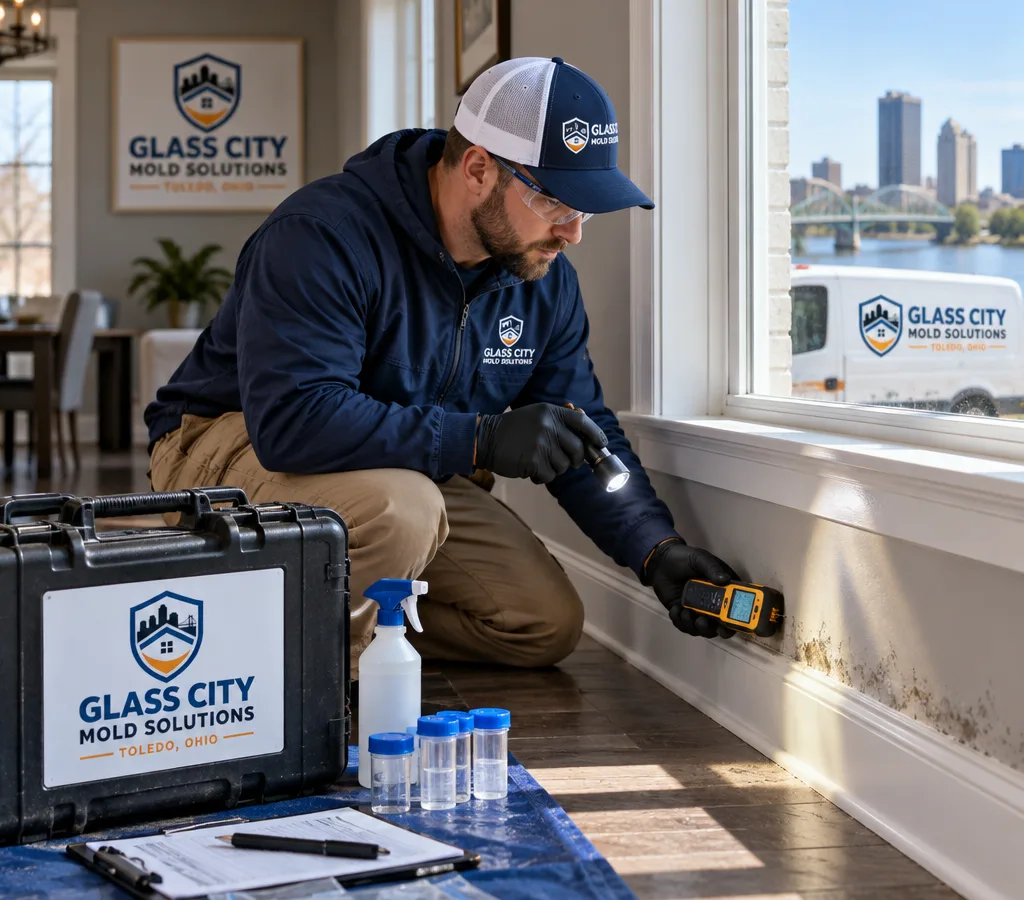
A thorough investigation
A proper mold inspection is an investigation, not a quick look around. For mold inspection Toledo Ohio appointments, we focus on three things: where moisture is coming from, where mold is likely growing—including areas you can't see—and what evidence is needed to make safe decisions.
What we do during an inspection
What a mold inspection is not
If inspection results show a problem that needs cleanup, you can review options for professional mold removal with a clear scope based on evidence, not assumptions.
Moisture patterns close to home
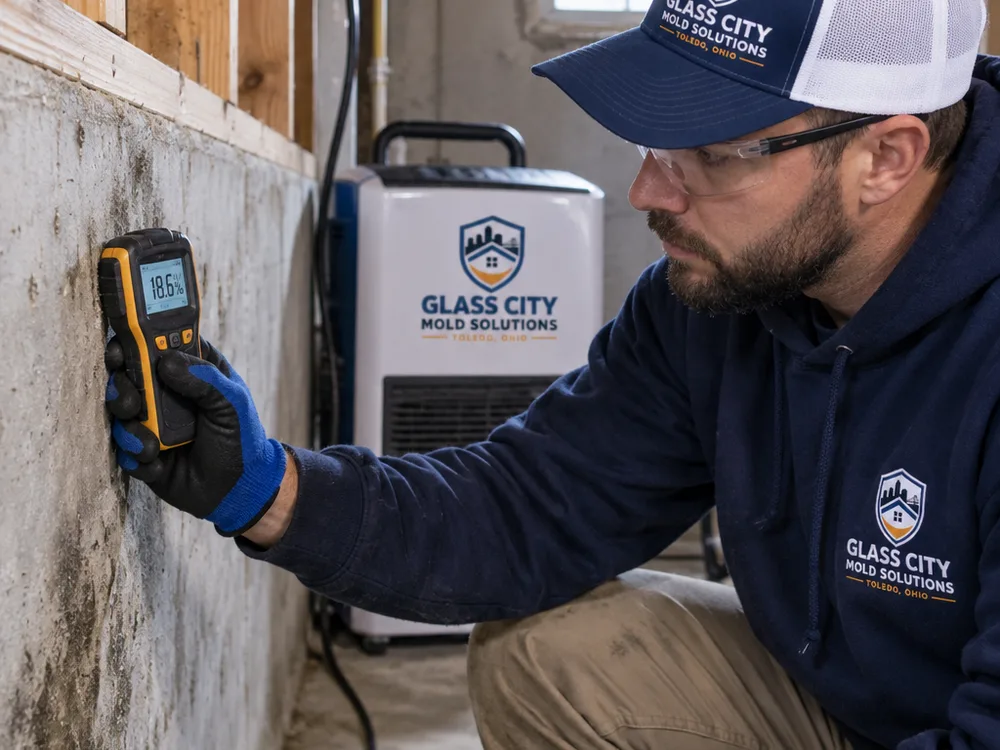
Moisture drives mold. In Toledo, we often see concerns after basement seepage, plumbing leaks that went unnoticed, or condensation in poorly ventilated spaces.
Older housing stock can add to the challenge because small foundation cracks, aging window seals, or older bath fans allow dampness to linger. Basements and crawl spaces deserve special attention because humidity can stay elevated even when the main living areas feel dry.
We also see seasonal swings where homes are closed up for heating or cooling, and small moisture sources—like a slow drain leak or sweating ductwork—build up over time. During the inspection, we're looking for the conditions that keep feeding growth so the fix actually holds.
We serve Toledo and nearby communities across Lucas County, including areas near Downtown, West Toledo, and the Oregon and Sylvania corridors when homeowners need clear, written findings fast.
Inspection deliverables
We identify likely growth areas and the moisture source behind them, so you can choose the right next step instead of guessing.
Sampling is used when it will clarify the scope, verify a suspected area, or support documentation needs for a landlord, buyer, or property manager.
You'll know what to dry, repair, or improve—ventilation, drainage, and leak fixes—to prevent repeat issues.
We provide a straightforward summary of observations, moisture readings, and any samples taken, with next-step guidance.
We use appropriate PPE, protect surfaces as needed, and keep disruption low while still being thorough.
From intake to written findings
You tell us what you're seeing or smelling, where it's happening, and any recent leaks or flooding. We schedule a time that fits your timeline.
We inspect the affected areas and adjacent spaces, looking for water staining, condensation patterns, material deterioration, and ventilation issues. Moisture readings help confirm where the building is staying wet.
If testing will change the plan, we collect air and/or surface samples using controlled methods and label locations clearly so results stay meaningful.
We walk you through what we found, what it likely means, and what steps usually come next. You receive a written summary you can use to plan repairs or remediation.
Inspection-based pricing
Mold inspection in Toledo typically ranges from about $250 to $650, depending on the size of the home, how many areas need investigation, and whether sampling is included. A small, targeted inspection for one room is usually on the lower end, while larger homes, basements plus attic checks, or multiple samples can push pricing higher.
Final cost depends on access—crawl spaces and finished basements—how much moisture mapping is needed, and how many samples make sense for clear documentation. Exact pricing is confirmed after we understand the property and goals for the inspection.
Homeowner experiences
We had a musty smell in the basement and couldn't tell if it was just humidity. The inspector mapped moisture, pointed out where air was getting trapped behind storage, and explained what was likely happening. The written findings made it easy to plan the next step.
During a home purchase we needed answers quickly. They checked the attic and basement, took samples where it mattered, and explained the results in plain language. It helped us negotiate repairs with confidence.
Questions before inspection
Most inspections take about 60 to 120 minutes on-site, depending on the home size and how many areas need moisture checks. If sampling is included, we'll also document exact locations so results match the conditions we observed.
An inspection is often enough when visible growth and moisture sources are clear, because the priority is stopping water and defining the affected materials. Testing is most useful when the concern is hidden, when symptoms don't match what's visible, or when you need documentation for a buyer, landlord, or property manager.
Leave the suspected area as-is and avoid spraying bleach or strong cleaners right before we arrive, because it can interfere with what we need to observe. If possible, clear a small path to affected walls, under-sink cabinets, or the attic access so we can inspect without moving lots of personal items.
Yes, if those areas are accessible, we can inspect them and take moisture readings. In Toledo homes, basements and crawl spaces often hold persistent humidity, so they're common places to find the conditions that keep mold recurring.
Yes. We can perform an inspection on a timeline that fits a contingency period, document findings, and explain what's urgent versus what's manageable. If you're coordinating access with an agent or seller, we'll tell you what we need ahead of time.
If we confirm mold growth or strong evidence of a problem, you'll get a clear plan: where moisture is coming from, what materials are likely affected, and what remediation scope is appropriate. If you decide to move forward with cleanup, we can discuss options and timing based on your situation.
In most cases, yes, because inspection is non-destructive and we use appropriate PPE and controlled methods. If we see conditions that suggest a higher risk—heavy growth, ongoing water intrusion, or a sensitive occupant—we'll discuss practical precautions right away.
If you're dealing with a musty odor, water damage, or a recurring spot that keeps coming back, an inspection is the fastest way to get a written scope and a realistic plan before any cleanup starts.
Call for a Free EstimateStart with an on-site inspection
Tell us what you're noticing and where. We'll help you confirm whether mold is present, identify the moisture source, and outline next steps you can act on.